
Find Cable TV, Internet & Streaming Plans Near You
Enter your zip for Cable TV, Internet & Streaming options near you




Spring into baseball with DIRECTV!
DIRECTV has the most MLB games, including Spring Training, period.* Not only that, but this season you can catch the World Baseball Classic and tons of college ball streaming on your favorite devices. With so much live action on deck, it's time to get your game together by scouting DIRECTV's packages today.
*Claim based on total games carried on Nat'l and combined local Regional Sports Networks. RSNs avail. with CHOICE package or higher. Avail. of RSNs varies by ZIP code and pkg. Blackouts apply.
Our Best of the Best Awards connect you to the most outstanding services

On the hunt for a new TV Provider? CableTV.com's TV expert picks the Best of the Best of TV providers in 2026. Get data-backed rankings and expert insights for the best cable, satellite, and streaming services.

Home internet service is a necessity, but also a pain. That's why our internet editor did the research for you and picked the Best of the Best of home internet in 2026 to get you the best providers, prices, and speeds.

Compare the Best of the Best of live TV streaming services in 2026. We tested YouTube TV, Hulu + Live TV, and more on price, local channels, and sports to help you find the best value.

Which streaming services are still worth it in 2026? Our streaming expert has rounded up the Best of the Best of on-demand streaming in 2026 to get you the scoop on price, shareability, exclusive content, and more.

Our sports editors have tested the top sports-centric streaming platforms to get you the Best of the Best of sports streaming in 2026 so you can tune in on game day with confidence.
Announcing the CableTV.com 2026 Customer Satisfaction Award winners!
Every year, we survey over 8,000 TV, streaming, and home internet customers to see what they really think about their home entertainment services. The results always surprise our staff, and we think they’ll surprise you, too. Check out our announcement page for a full list of winners, or click on one of the surveys below to get more information.
We asked nearly 5,000 TV customers to rate their TV providers across categories such as cost, reliability, channel count, and more. See how top providers like Spectrum, Xfinity, Verizon, and more rank in customer satisfaction.
We surveyed 8,000+ customers to find the best live TV streaming services of 2026. See what topped the list and why the results differ a lot from previous years.

The results are in! Our exclusive 2026 survey reveals the best on-demand streaming TV providers ranked by real customer satisfaction data. See the current industry leaders now.
Find out what customers like you think of top internet service providers across the U.S. See how real customers feel about speed, billing, and more.
Let us hook you up with the best TV and internet
Here at CableTV.com, we make the search for TV and internet in your area easy so you can fast-forward to the fun part—having TV and internet.

TV service
Your favorite shows and movies are chilling out on cable TV, satellite TV, and online streaming services. We’ll break down all these TV options so you can find your favorite way to tune in.
See TV Providers
Internet service
You deserve internet with fast download speeds and tons of data—at a great price. We research and review every major internet provider in the US so your home Wi-Fi will rock.
See Internet Providers
Compare providers
At first glance, all your cable TV and internet options may seem overwhelming. But once you see which providers are in your area, it’s easy to compare them head-to-head.
Compare Providers
Helpful resources
We’re here to help you binge-watch TV and surf the internet better. That’s why we’ve got the hook up on the best universal remotes, streaming devices, mesh Wi-Fi, and more.
Browse ArticlesFind top internet and TV providers
We’ve got the deets on every major TV and internet provider in the US. Read some of our expert reviews to see
which one is right for you.
TV providers


Streaming providers



Internet providers




Get quick answers without the stress
Certain questions are easy to answer if you’ve got the right tool for the job. Spare yourself the elbow grease—our toolbox is ready for you, neighbor.

What show should you watch next?
No need to channel surf—you can find the perfect show for your tastes with the help of our TV show algorithm. It’s like a mystical TV mind reader.

How far should your couch be from your TV?
Listen, this might sound silly, but how you position your TV totally affects its visibility—and your comfort. Now you don’t have to go blind like your mother warned, all thanks to our TV distance calculator.
We research so you don't have to
No one here expects you to know everything about TV and internet—that’s our job. So let our team of experts guide you to the best services and products out there.
Check out our head-to-head comparisons

Sling TV offers a good deal for an affordable price—its packages have some flexibility, and its largest package is still cheaper than YouTube TV. But YouTube TV offers more channels and unlimited cloud DVR storage space, so in many ways, you really do get what you pay for.


When the competition is AT&T Fiber vs. Xfinity Internet, we say AT&T is better than Xfinity. While our recent customer satisfaction survey put AT&T Fiber and Xfinity Internet on equal footing for reliability, you’ll get faster speeds if you go with AT&T Fiber.
DISH and DIRECTV square off in this match-up of satellite TV titans. Get the pros and cons of TV service from DISH vs DIRECTV in an unbiased comparison from CableTV.com. Spoiler alert: we give the edge to DISH.
Let's start watching!
Super fans, rejoice! Our TV guides help you watch the entertainment you’re passionate about, whether that’s pro football, live news, or streaming originals.
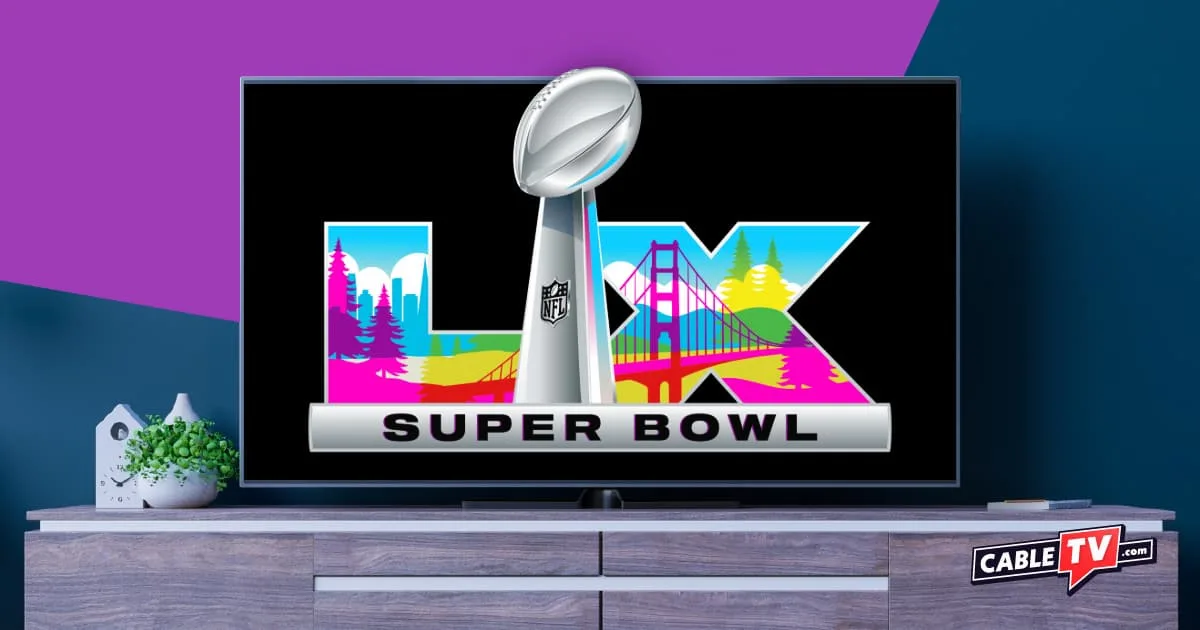
There's a reason the Super Bowl is the most-watched sporting event in the U.S. It's always on a local broadcast channel (ABC, CBS, FOX, or NBC), which makes it easy to catch inexpensively or even for free. Find out how to watch this season’s Super Bowl with our expert guide.

The 2026 Winter Games return to Europe for the first time in 20 years. Here's how to watch all 116 medal events live on TV in the U.S., thanks to NBC Sports.

Catch your favorite show, film, or musician with our list of upcoming awards shows.


Life comes at you fast—news comes even faster. Luckily, there are a ton of live TV news channels, like ABC, CBS, FOX, NBC, and more, available for you to watch and stream for free.
We examined dozens of TV providers to find the best ones for watching college basketball. Read our expert review to see which services get you the most NCAA basketball coverage this season.

It’s time for the Spring 2026 anime season—find your next obsession with our guide to this season’s hottest new and returning titles.
