52.7% of Americans Predict TV Mergers Will Raise Costs—And 54% Are Ready to Jump Ship

Historic media mergers are taking over the TV biz
Your cable and streaming bills are likely climbing, but you might not know exactly why. Behind the scenes, massive corporations are buying up local TV stations at an alarming rate. In fact, new CableTV.com data shows nearly half of Americans are completely unaware of the industry’s latest $6.2 billion mega-deal.
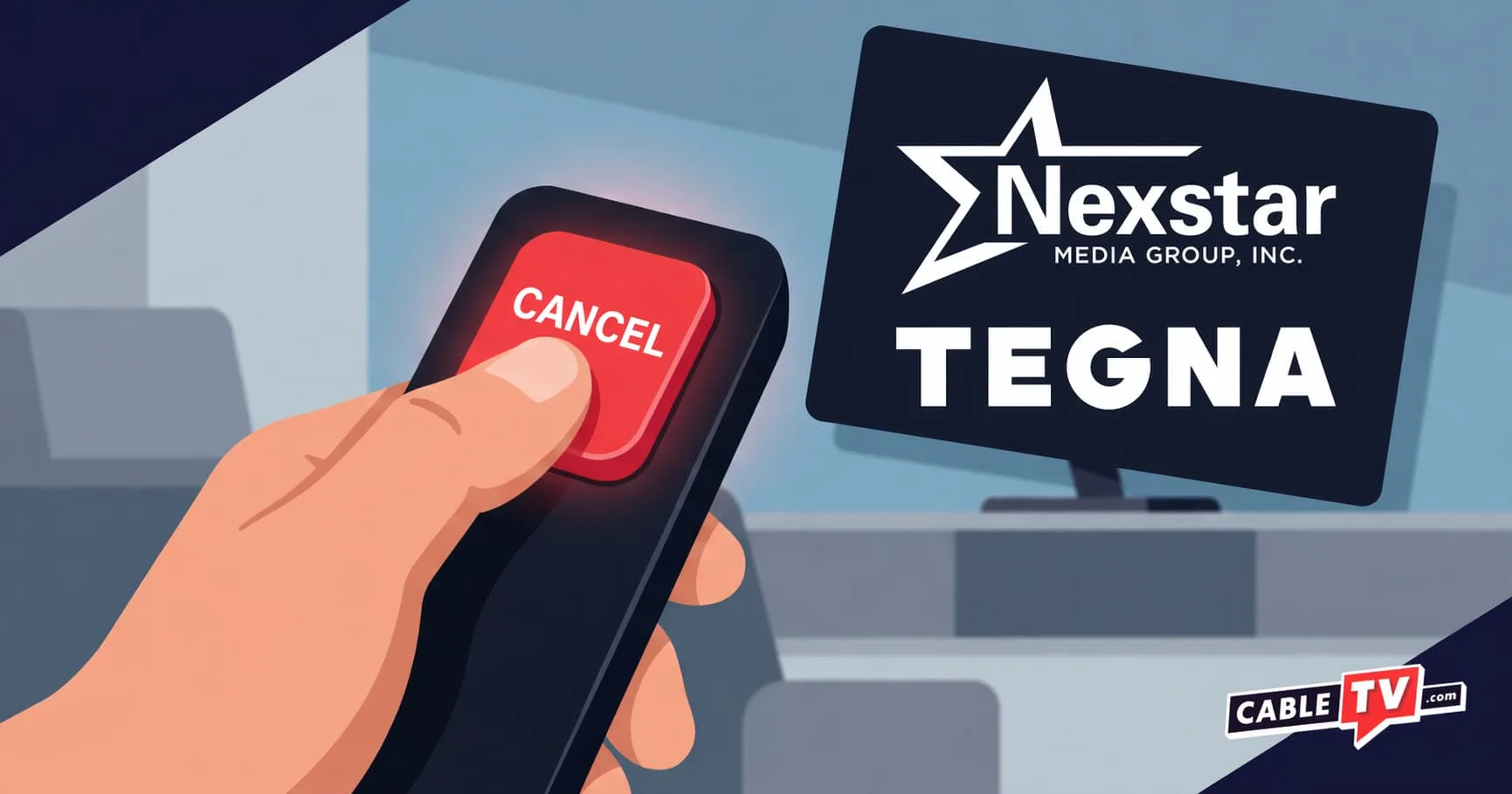
Understanding the true impact of the Nexstar-TEGNA merger starts by examining its massive scale. Following its recent approval, this buyout created the largest local TV owner in U.S. history, reaching 80% of American households. That level of market dominance gives one company incredible leverage to hike up prices.
But the historic deal hit a major roadblock last Friday. A federal judge temporarily blocked Nexstar from integrating TEGNA’s stations while a monopoly lawsuit plays out in court. This legal pause gives us a chance to unpack how these corporate buyouts directly threaten your monthly budget, local news, and how you watch TV.
How media mergers are threatening your wallet
When a single media giant buys up hundreds of local stations, it gains immense leverage to demand higher retransmission fees from TV distributors. Providers like DIRECTV, Spectrum, and YouTube TV are then forced to pay up, inevitably passing those climbing costs down to subscribers. This corporate tug-of-war is exactly why 52.7% of Americans predict these mergers will raise their monthly bills.
But TV consumers have a strict limit on how much they’re willing to pay for these corporate buyouts. According to our survey, over 56% of consumers would change or cancel their service if their monthly bill increased by up to $20.
When providers push back against these fees, conglomerates often pull the plug, resulting in sudden channel blackouts. As a result, viewers are abruptly locked out of live broadcasts, including marquee NFL games, college football rivalries, and prime-time MLB matchups. This isn’t just a hypothetical threat; 22.1% of viewers report losing access to a local TV channel in the past two years due to a provider dispute.
Why local news is caught in the crosshairs
When national media companies buy up local stations, the “local” aspect is often the first thing on the chopping block. Instead of relying on community reporters who understand your neighborhood, new owners frequently create centralized broadcasting hubs.
As Judge Troy L. Nunley noted in his preliminary injunction, “Nexstar has an established track record of consolidating newsrooms when it owns more than one station in a [designated market area], meaning it reduces the independent news operations from two to one.”
This consolidation threatens a rare bright spot in today’s media landscape. While general media credibility faces intense scrutiny, local broadcasters maintain a remarkably strong community bond. Our survey reveals that 81.1% of viewers trust their local TV station to cover community issues fairly, with 25.4% trusting it “a great deal” and 55.7% “a fair amount.”
But that loyalty is highly fragile. The ultimate impact of the Nexstar-TEGNA merger could be a drop in viewership. If a national owner reduces local talent, 44.3% of viewers would defect. With 33.5% watching less often and 10.8% stopping entirely, the warning to media giants is clear: Stripping a station’s local identity undermines why people tune in.
Antenna TV is your best defense against rising fees
If companies like Nexstar continue to swallow up local stations and drive up retransmission fees, your best defense is to cut the cord altogether. But our survey reveals a massive public misconception holding viewers back: 16.7% of Americans mistakenly believe a paid subscription is always required to watch local TV. Furthermore, 9.8% think local channels are only available through cable or streaming services.
The truth is, you can bypass carriage disputes between mega-broadcasters and TV providers. As long as you live in an area with a reliable broadcast signal, a one-time purchase of an over-the-air antenna provides free access to local news, weather, and sports.
The bottom line is that media consolidation creates higher costs and less local flavor for everyday viewers. As a consumer, your best defense is to find out exactly who owns your local stations and explore free, over-the-air alternatives to keep your TV bill in check.
Beyond your living room, you can make your voice heard by staying informed on the latest FCC developments. Public comment periods are a crucial part of federal reviews for massive corporate buyouts, allowing everyday consumers to officially submit their feedback directly to the agency.
