Live Sports Playbook: What US Fans Pay to Watch in 2026

Sports fans pay for TV but still face uncertainty
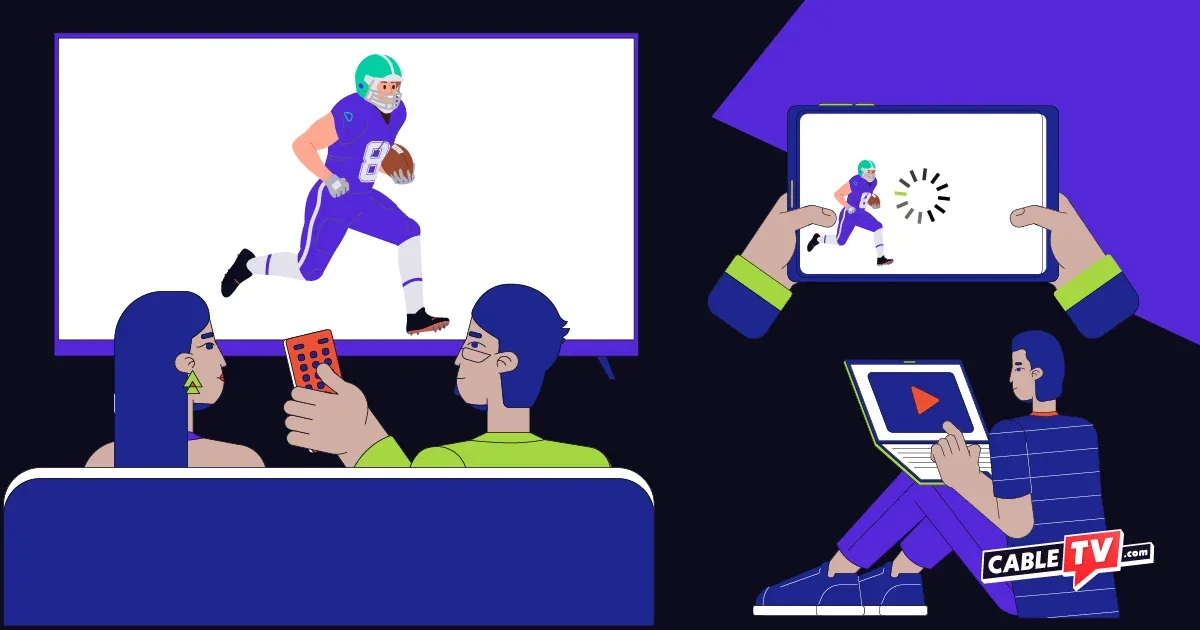
Being a sports fan in 2026 can feel like a part-time job. One league might be relatively simple to follow, while another can send you bouncing between a live TV service, standalone streaming apps, and league-specific packages. Even sticking with a traditional TV provider doesn’t necessarily get you out of the maze.
That fragmentation shows up clearly in CableTV.com’s 2026 live sports viewing survey. U.S. sports fans use an average of 2.4 paid TV or streaming services to watch sports. Even with multiple subscriptions, many still deal with blackouts, buffering, and uncertainty over whether their setup will carry the game or event they want.
Our findings show the cost of watching live sports in 2026 and where that investment falls short. In this report, we’ll follow that experience from paying the monthly bill to figuring out where to watch and navigating the issues that can disrupt game day on TV. We also explore how fans adapt and what could ultimately push them to switch providers.
How much are fans paying to watch live sports?
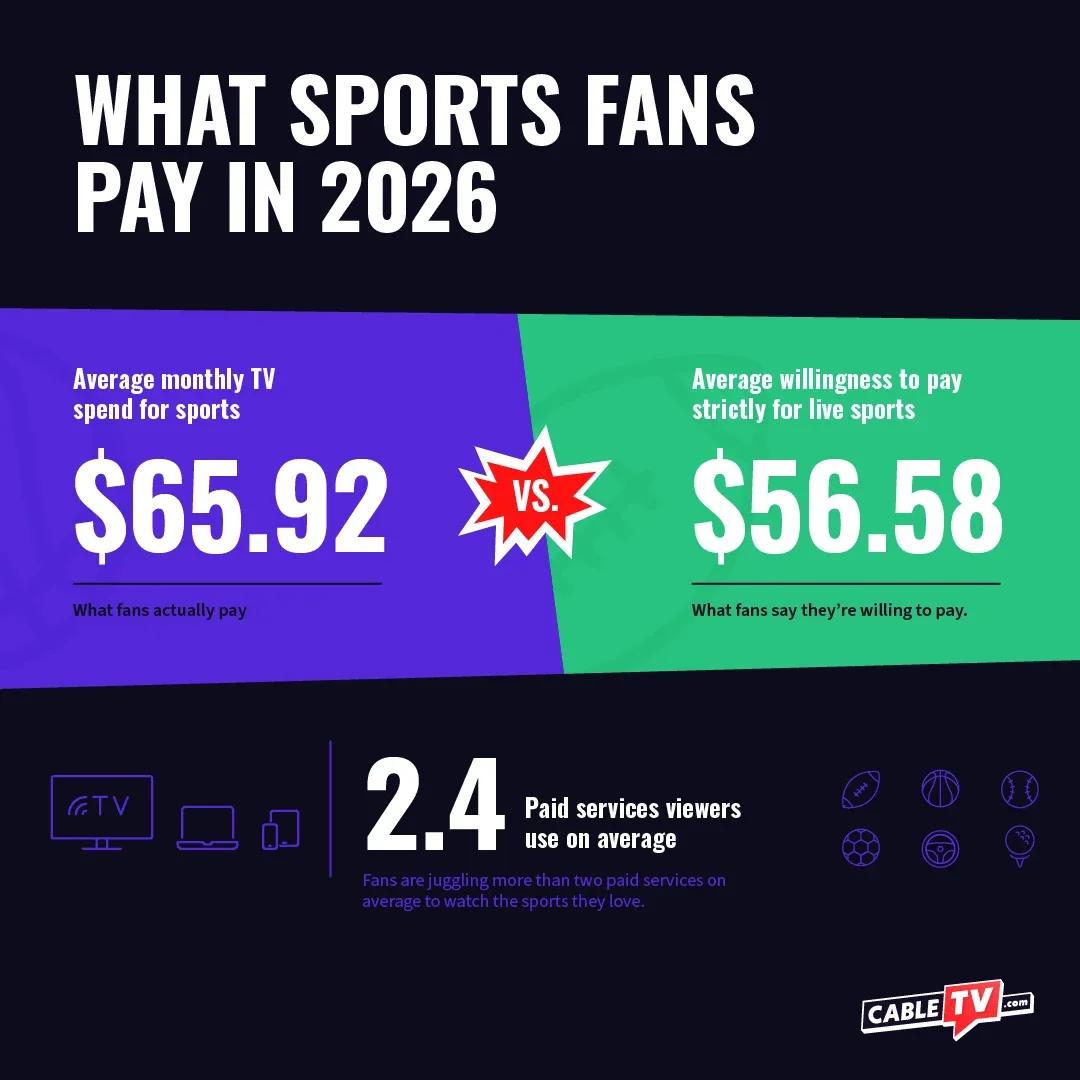
Let’s start with the bill. U.S. sports fans spend an average of $65.92 per month on the cable, satellite, or live TV streaming services they use to watch sports, with a median monthly spend of $63.00.
Asked separately what they would pay strictly for live sports coverage, respondents set a lower average ceiling of $56.58 per month. The questions measure slightly different things, but the contrast is still revealing. Fans’ broader TV spending for sports access runs more than $9.00 higher than the maximum they say they would pay for live sports alone.
Most fans juggle multiple services
That $65.92 figure is only part of the picture, especially when you consider how many services fans use to watch sports. Survey respondents use an average of 2.4 paid TV or streaming services for sports, with two services being the most common response at 30.9%.
Only 25.8% use just one paid service, meaning nearly three out of four fans use at least two. Services such as Amazon Prime Video, ESPN Select (ESPN+), and Peacock carry exclusive games and events that may not be available through a fan’s primary live TV provider. For some fans, those subscriptions aren’t extras; they’re part of completing the lineup.
Live sports keep viewers subscribed — but loyalty has limits
Sports fans don’t get much say in where their favorite teams, leagues, or competitions end up on TV. As viewers chase coverage from one platform to the next, provider loyalty can feel fluid. The loyalty stays with the team; the subscription follows the rights.
That dynamic shows up clearly in our survey. More than half of respondents (54.9%) say live sports is the only reason they still pay for a TV provider or live streaming service, and 57.9% pay for at least one service only during a specific sports season. Taken together, those findings suggest that sports subscriptions can function less like year-round commitments and more like tickets to the games fans care about.
That loyalty has limits, too. Nearly half (46.4%) would cancel their TV service entirely if their team’s games were available elsewhere, but canceling isn’t always as clean as it sounds. Nearly 46% of fans have kept paying for a service they meant to cancel after a season ended. A service can feel essential while the games are on and easy to question once the season ends.
Fans want more flexible ways to pay
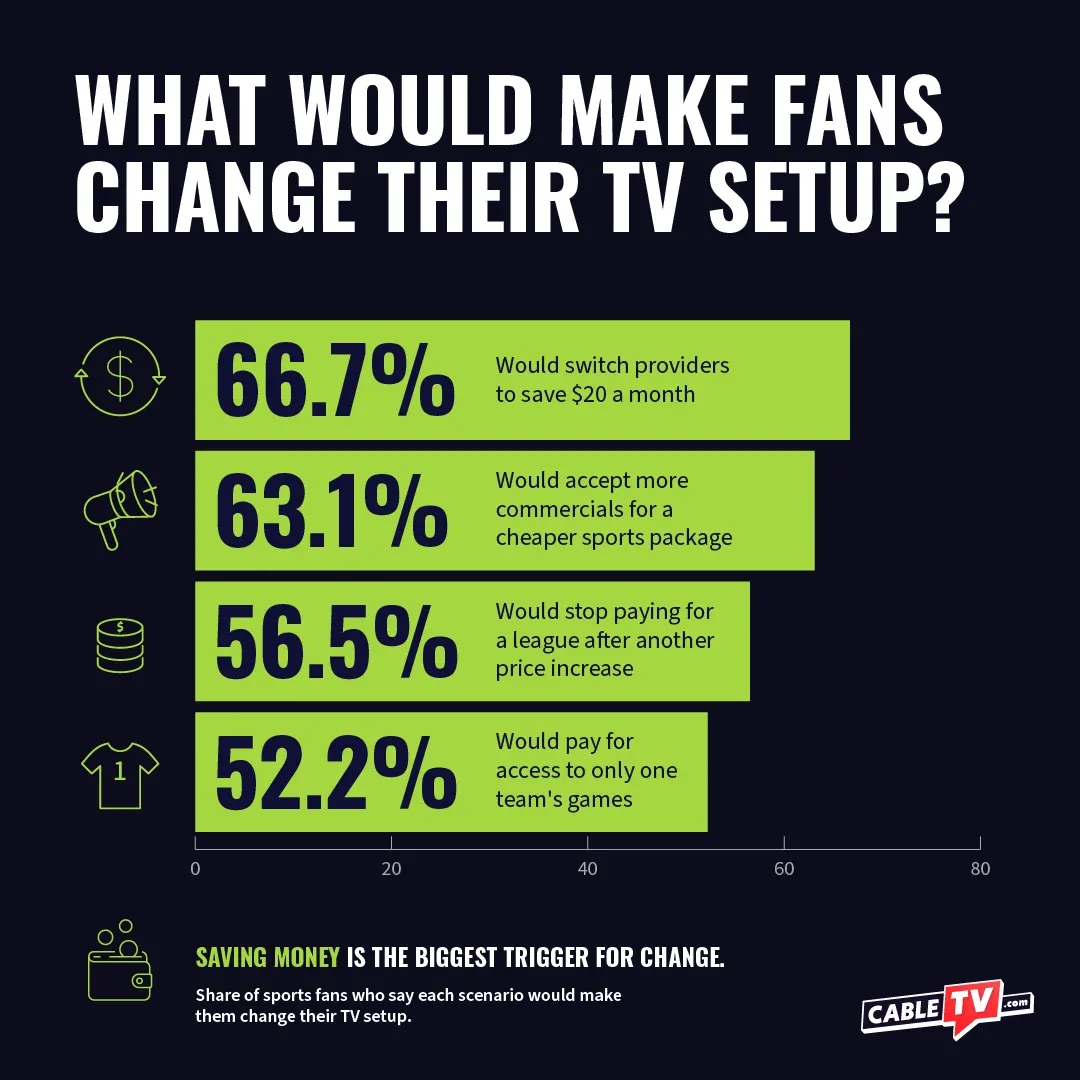
Price makes those limits even clearer. Two-thirds of fans (66.7%) would switch providers to save $20 a month, while 56.5% say they would stop paying to watch a league they like if prices rose again. But many are open to compromises instead: About 63% of fans would accept more commercials for a cheaper sports package, and 52.2% would pay for access to only one team’s games if that option existed.
Some fans already use more flexible payment options. In the past year, 41.7% have bought a single-game TV pass or pay-per-view event, while 40.7% say they’d prefer paying per game or event over a monthly subscription.
Live TV streaming providers are testing more targeted options, too. YouTube TV now offers a Sports Plan alongside other genre-based plans, while Sling TV sells one-, three-, and seven-day passes. One gives viewers more control over what they subscribe to; the other gives them more control over how long they keep it.
Finding the game is still harder than it should be
Paying for the game is one thing. Finding it is another. U.S. sports fans spend about 12 minutes each week figuring out where live games or events are airing — not a huge amount of time on its own, but still a recurring chore for something viewers are already paying to watch.
Knowing where to look doesn’t always guarantee access, either. Only 21.7% of respondents say they’re extremely confident that their main TV setup will carry any given game they want to watch.

Only 21.7% of sports fans
believe their current TV setup will get them the game.
Blackouts make that uncertainty more than an inconvenience. In the past year, 37.7% of fans say a blackout prevented them from watching a local team, while 26.0% say they can’t watch their in-market team at all with their current setup. Nearly half (45.8%) have even considered switching providers specifically to get access to a regional sports network.
Fans want the game before the extras
When fans choose a service for live sports, getting the games they care about matters most. Access to favorite teams, leagues, or events ranked as the most important factor in our survey, followed closely by price and then picture quality and technical reliability.
Convenience and viewing features rank much lower. Ease of use ranked fifth overall, while multiview and other viewing features finished last. Before fans worry about bells and whistles, they want to know one thing: Will this service actually carry what I want to watch?
What matters most when choosing a sports TV service?
| Rank | Factor | Average rank |
|---|---|---|
| 1 | Access to favorite teams, leagues, or events | 2.69 |
| 2 | Price | 2.84 |
| 3 | Picture quality and reliability | 3.11 |
| 4 | No blackouts or local-market restrictions | 3.67 |
| 5 | Ease of use | 4.11 |
| 6 | Multiview and other viewing features | 4.59 |
Lower average rank means respondents considered the factor more important.
A premium price doesn’t guarantee a premium viewing experience
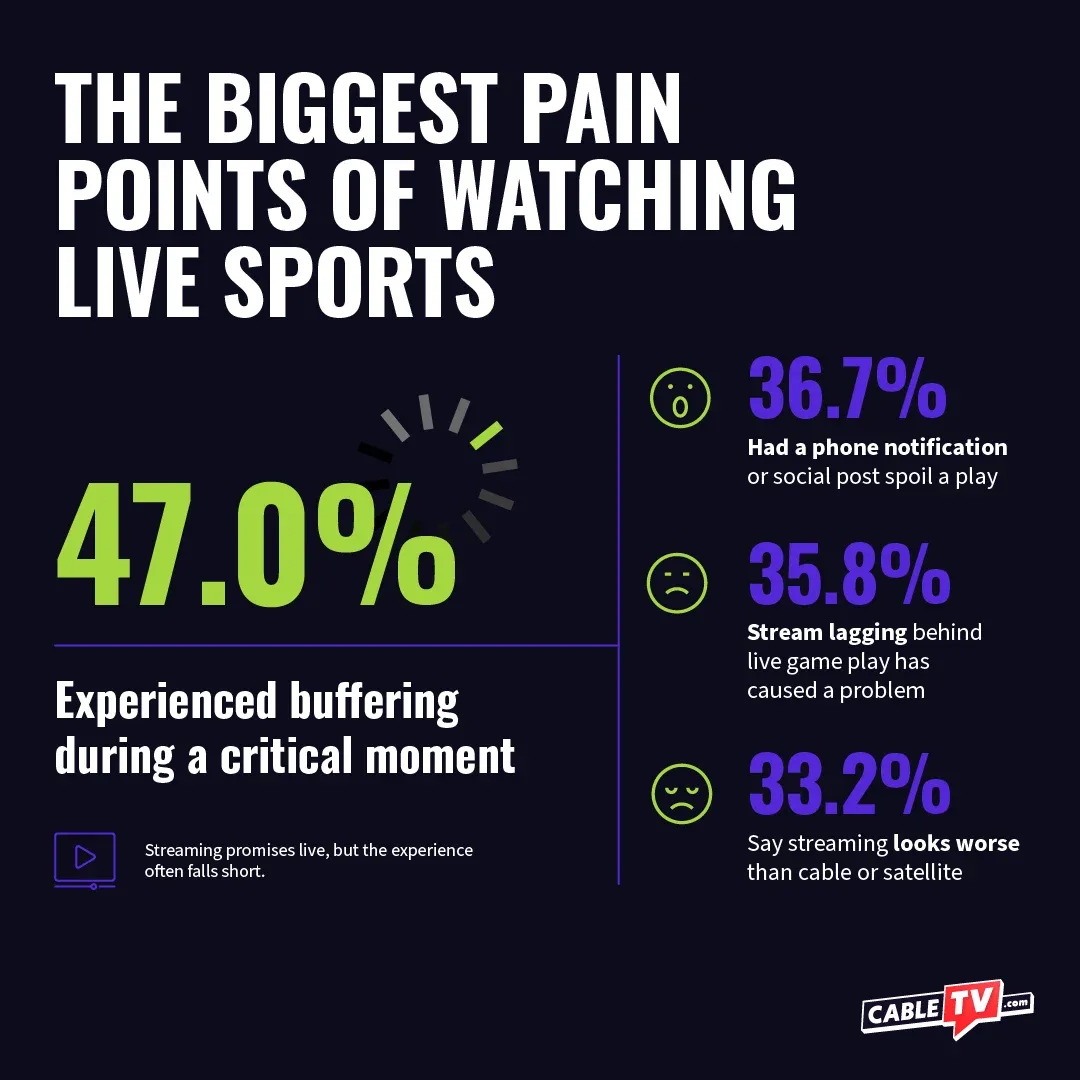
After fans piece together the right services and track down the game, the stream still has to keep up with the action. Nearly half (47.0%) say they’ve experienced buffering during a critical moment in the past year.
Being behind the action creates another frustration. More than a third of fans (35.8%) say stream lag has caused problems, while 36.7% have had a phone notification or social post spoil a play before they saw it. For live sports, even getting the game isn’t quite enough if another screen gives away the moment first.
Even so, fans are investing in the viewing experience. About 43.0% have upgraded their TV or internet service specifically for sports. At the same time, 33.2% say streaming looks worse than cable or satellite TV for fast-moving action.
How much streaming delay will fans tolerate?
For live sports, the word “live” sets a high bar. Just over half of our survey respondents (50.6%) say they’ll accept no more than 10 seconds of delay from the actual action, including 16.1% who won’t tolerate any delay at all.
Another 20.6% consider 11 to 30 seconds acceptable, but tolerance drops from there. Only 5.7% say more than a minute is acceptable, while 4.2% say delay doesn’t matter to them.
That low tolerance is a tricky fit for the streaming era. According to Stats Perform, major streaming feeds during Super Bowl LX ran 48 to 62 seconds behind the field, compared with 38 seconds for cable and 19 seconds for over-the-air TV.
How sports fans work around cost and access problems
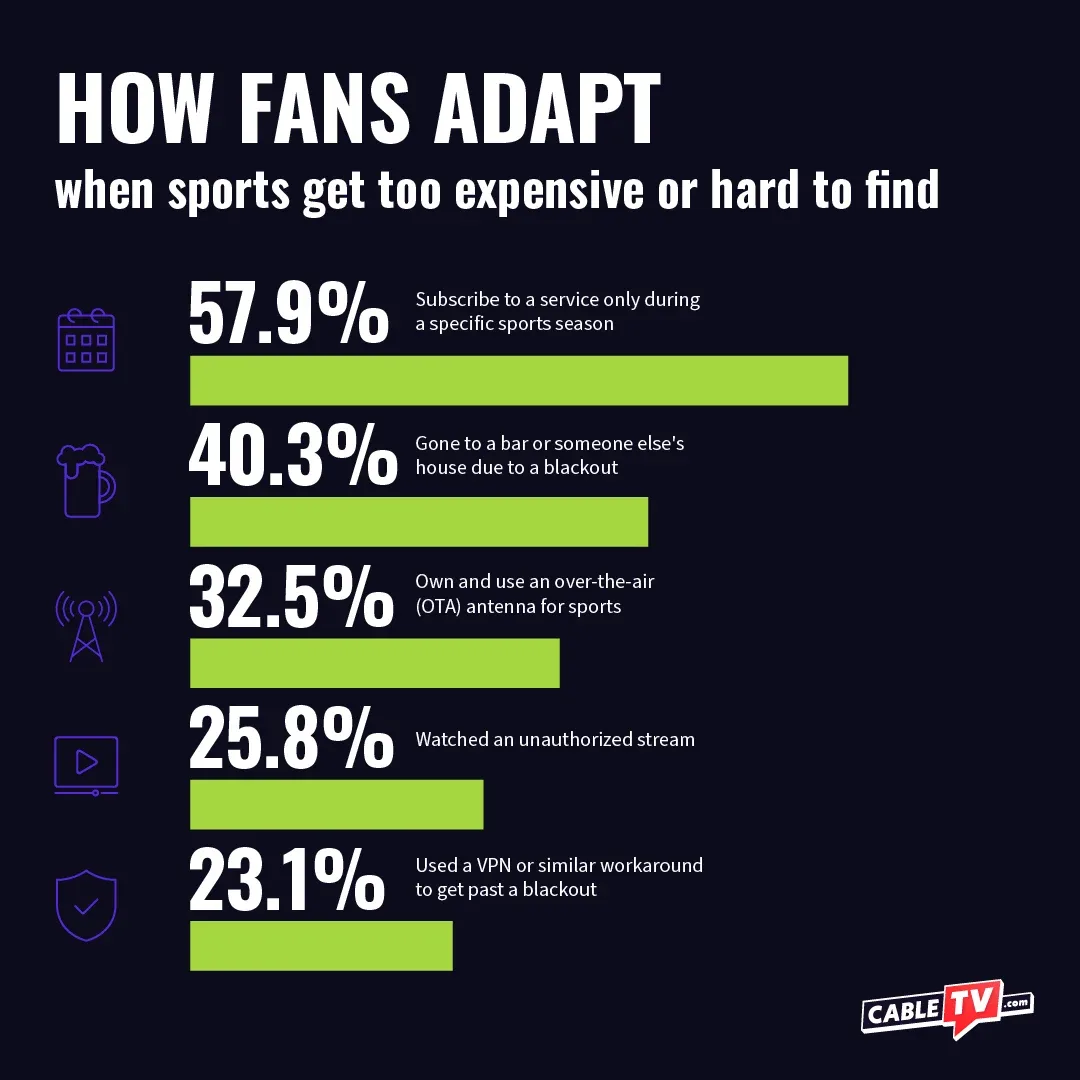
When the standard setup falls short, fans improvise. Some change when they subscribe, some change where they watch, and others find another route to the game. As noted earlier, 57.9% pay for at least one service only during a specific sports season, allowing their subscription lineup to shift with the calendar.
Blackouts can send viewers outside their usual setup altogether. About 40.3% have gone to a bar or someone else’s home because a game was blacked out, while 23.1% have used a VPN or similar workaround to get past one. Separately, 25.8% report watching an unauthorized stream in the past year, though the survey doesn’t say what motivated them.
Free TV still has a place in the lineup
Not every alternative comes with another monthly bill. Nearly one-third of sports fans (32.5%) say they own and use an over-the-air antenna for sports. When games air on local broadcast channels, an antenna can complement a paid TV or streaming setup rather than replace it.
That mix of old and new technology captures where sports viewing stands in 2026. Fans are changing when they subscribe, where they watch, and what they add to their setups to keep up with the games they care about. The rights may determine where the games live, but fans are finding their own ways to get there.
Methodology
To compile our findings, CableTV.com surveyed 1,000 U.S. adults who said they watch live sports on TV or online. The survey was conducted via Pollfish on August 6, 2026, and the results were post-stratified to reflect the broader U.S. population on key demographics. Responses were self-reported. Monthly spending and willingness-to-pay amounts were collected in price ranges, so the reported dollar figures are estimates based on values assigned to those ranges rather than respondents’ individual bills.
