
11 Best Winter Olympics Documentaries: A Guide to the Official Films

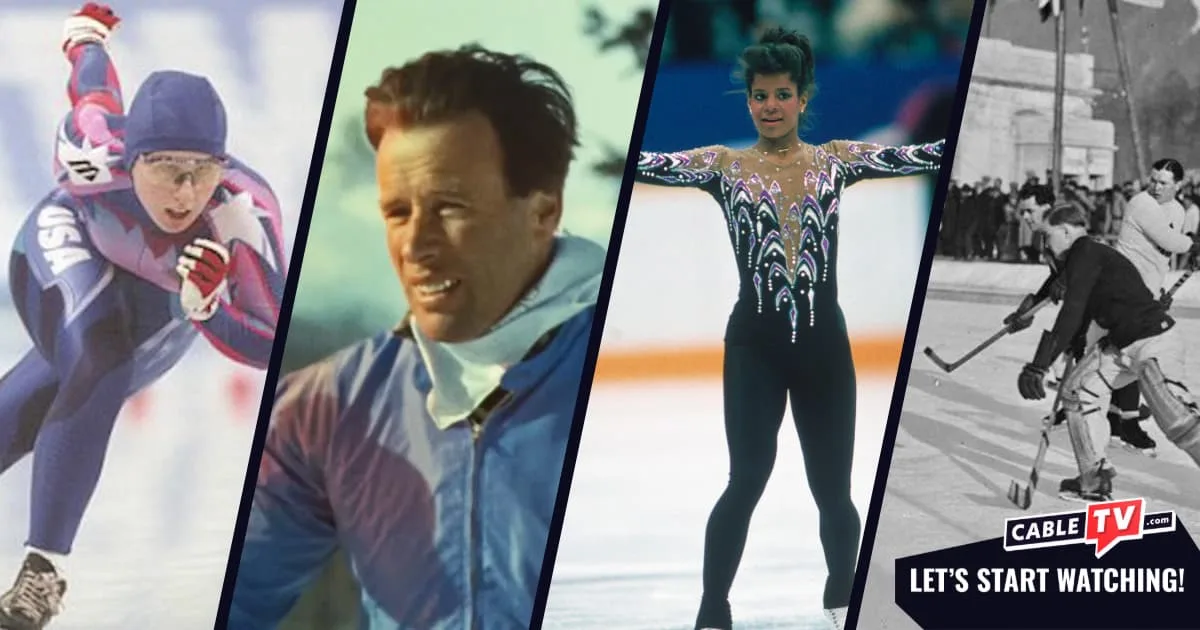
To see the history of winter sports through a cinematic lens, I always recommend starting with the best Winter Olympics documentaries ever commissioned. I’m referring to the official films produced in compliance with the Olympic Charter. They’re fascinating time capsules that show us how the world (and the way we film it) has evolved from the silent grandeur of the 1920s to the high-definition drama of the modern era.
With the Milan Cortina 2026 Games currently taking over our screens, it’s the perfect time to look back at previous editions. While most of the films are largely accessible on platforms like Olympics.com and The Criterion Channel, the sheer volume of content can be daunting. I’ve done the heavy lifting to find the gold medalists of the catalog. Here’s my guide to the official films you absolutely need to watch.
“The Olympic Games Held at Chamonix in 1924” (1924)
If you want to see where it all began, this silent film is mandatory viewing. Running just under 40 minutes, “The Olympic Games Held at Chamonix in 1924” captures the first-ever Winter Olympics in their rawest form.
Don’t expect the polished narratives of modern documentaries. Instead, director Jean de Rovera offers a vivid look at a bygone era, featuring figure skaters in wool skirts and hockey players competing without helmets. The resulting atmosphere feels more like a charming winter carnival than the high-stakes global competition we know today.
“The White Stadium” (1928)
Four years after the inaugural Winter Olympics, the 1928 Games hit the legendary Alpine slopes of St. Moritz. “The White Stadium” chronicles it all with surprising sophistication, showcasing a period when the Winter Games were still finding their footing.
Restored in 2011, this silent documentary makes excellent use of multi-camera placements to deliver a mesmerizing perspective on early 20th-century sports. It functions as a cinematic cornerstone, ditching standard wide shots for dynamic angles that set the visual blueprint for every Olympic documentary that followed.
“White Vertigo” (1956)
Filmed in stunning Eastmancolor, “White Vertigo” is widely considered one of the most artistic entries in the Olympic canon. Director Giorgio Ferroni moves away from simple reporting to capture the sheer beauty of the Dolomites, the same jagged peaks that serve as the backdrop for the 2026 Games.
The film’s visuals are powered by a team of Italian cinematographers, including Aldo Scavarda, who later shot Michelangelo Antonioni’s masterpiece “L’Avventura.” Their artistry perfectly preserves the competition, most notably the historic dominance of Austrian legend Toni Sailer, who famously swept all three alpine events.
“IX Olympic Winter Games, Innsbruck 1964” (1964)
If “The White Stadium” and “White Vertigo” were triumphs of imagery, director Theo Hörmann’s Innsbruck 1964 is an accomplishment of storytelling. This German-language doc takes a more technical approach, guiding viewers through each discipline with detailed commentary and innovative aerial footage shot from a helicopter.
Hörmann vividly paints the Austrian setting through unique editing and folkloric charm. You’ll see the legendary “snow rescue” where the military hauled in ice to save the tracks, alongside lighter moments like a skiing montage set to the sweet sounds of Alpine yodeling. It’s a fascinating, high-altitude look at the Games that you truly can’t pass up.
“Sapporo Winter Olympics” (1972)
Taking a break from Europe, the Winter Games made their way to Asia for the first time in 1972. Japan’s northern city of Sapporo served as the host, and the resulting documentary remains one of the most distinctive Olympic films ever produced.
Japanese New Wave director Masahiro Shinoda expertly utilizes widescreen photography to capture the scale of the event. His approach transforms the viewing experience, making it feel like a sweeping, dramatic interpretation of the Games themselves. It’s a visually stunning achievement that really prioritizes artistic mood.
“Calgary ’88: 16 Days of Glory” (1989)
As the longest Olympics documentary on this list, “Calgary ’88” doesn’t take many shortcuts, offering an exhaustive and emotional look at the competition. Its massive 202-minute runtime is a direct reflection of the 1988 Winter Olympics, which were the first to expand the schedule to 16 full days.
Director Bud Greenspan uses that extra time to delve into legendary athletic performances, including the soaring flights of Finnish ski jumper Matti Nykänen. Most notably, Greenspan captures every tense moment of the Battle of the Brians, where figure skaters Brian Orser and Brian Boitano went neck and neck in a historic duel for the men’s singles gold medal.
“Nagano ’98 Olympics: Stories of Honor and Glory” (1998)
The Winter Olympics returned to Japan in 1998, arriving right in the heart of Bud Greenspan’s most prolific era as an Olympic filmmaker. This installment serves as a perfect example of his compassionate approach to the Games. Through a sympathetic lens, Greenspan honors every athlete’s journey, focusing as much on the character of the competitors as he does on the champions standing on the podium.
It’s difficult to walk away from this film without becoming at least a little teary-eyed. Greenspan’s intimate profiles of Chinese figure skater Lu Chen and American speed skater Kirstin Holum are especially emotional, proving that the most enduring Olympic stories aren’t always found in the gold medal count.
“Salt Lake City 2002: Bud Greenspan’s Stories of Olympic Glory” (2003)
With the official film of the 2002 Winter Olympics, Greenspan once again proved that all great stories have a human element at their core.
An example of this comes during a segment focused on Australian freestyle skier Jacqui Cooper. Regarded as the best in her sport, Cooper was badly injured in Nagano only to return in 2002 as a clear favorite to win gold. Tragically, Cooper’s Olympic dreams came to a halt once again after a training accident occurred just days before the qualifying round.
Greenspan’s attention to stories like this is what makes his films so enduring. He captured the true spirit of the Olympic Games by showing the world what it looks like to get back up.
“Bud Greenspan’s Torino 2006: Stories of Olympic Glory” (2007)
Every Olympic Games produces iconic moments, but Torino 2006 offered a level of spectacle that was truly unique. This installment captures the 20th Olympic Winter Games at their most grand, from Luciano Pavarotti’s final public performance during the opening ceremony to Shizuka Arakawa’s graceful gold-medal victory on the ice.
Fortunately for fans of the human element, Greenspan and director Nancy Beffa were there to document it all. Their lens provides a front-row seat to some of the most memorable stories in modern Olympic history, ensuring that the passion and pageantry of Italy’s Games are preserved with the same emotional depth found in their previous collaborations.
“Bud Greenspan Presents Vancouver 2010: Stories of Olympic Glory” (2010)
For Canada, the 2010 Winter Olympics were the perfect sequel to the 1988 Calgary Games. All the hard work that went into making Calgary a success paid dividends 22 years later as the host country won the most Olympic gold medals at the Vancouver Games.
Behind the camera, the feat was just as impressive. Vancouver 2010 showcases Greenspan and his team working at the height of their powers to deliver their most concise and visually striking documentary yet. The film moves with a polished, modern energy while maintaining the signature storytelling that fans had come to expect.
Sadly, this marked the 10th and final Olympic film of the Greenspan era. Bud Greenspan passed away later that year at the age of 84, leaving behind a legendary body of work that forever redefined the sports documentary genre.
“Crossing Beyond” (2018)
As the official film of the 2018 PyeongChang Games, “Crossing Beyond” marks a stylistic shift away from the traditional Olympic documentary. Directed by Yi Seung-jun, the film embraces a sleek, cinematic aesthetic that mirrors the high-tech energy of South Korea’s first Winter Olympics.
The narrative follows an eclectic group of five athletes, focusing on the shared drive required to reach the world stage. By highlighting the emotional and physical hurdles of competitors from diverse backgrounds, Yi captures a universal sense of “crossing beyond” one’s limits. It’is a visually arresting entry in the Olympic canon, proving that the modern Games are just as much about the beauty of the human spirit as they were in the 1920s.
