
The Cost of the World Cup: What Americans Will Spend To Watch the 2026 Tournament


Why the 2026 World Cup is free for some but costly for others
The cost to watch the FIFA World Cup is a study in two extremes this summer. It will either cost you nothing or completely rewrite your monthly budget.
If you already pay for a robust traditional TV package, you won’t need to spend an extra dime to tune in. Even cord-cutters can save on costs by picking up local broadcasts with an over-the-air antenna, or by turning to inexpensive streaming platforms like FOX One and Peacock Premium.
But for millions of other Americans, following this 104-match tournament means opening their wallets. Viewers are splitting their money into two distinct spending buckets. The first centers on screen-based costs — like signing up for a streaming service or upgrading an existing TV setup — while the second covers the premium expenses tied to traveling and attending matches in person.
At CableTV.com, we’re just as obsessed with the tournament’s economic impact as we are with the action on the pitch. That’s why we surveyed 1,000 U.S. viewers to find out exactly how much fans are budgeting for the 104-match tournament. Here’s what the data tells us.
Key findings
- 73% of U.S. FIFA World Cup fans plan to watch matches on traditional TV or cable.
- The average maximum price fans would pay for a “nosebleed” ticket is $302.53.
- U.S. FIFA World Cup fans who expect to carry debt for the tournament anticipate carrying $840.84 on average.
- 45% of fans who want to attend a match would cut back on clothing and luxury shopping to fund the experience.
The cost (and churn) of World Cup streaming
For most viewers, tuning into this quadrennial spectacle is an intense emotional investment before it ever becomes a financial one. Fans across the U.S. will be watching to see world-class players at their peak, passionately supporting their home countries, ancestral motherlands, or simply the pure artistry of the beautiful game.
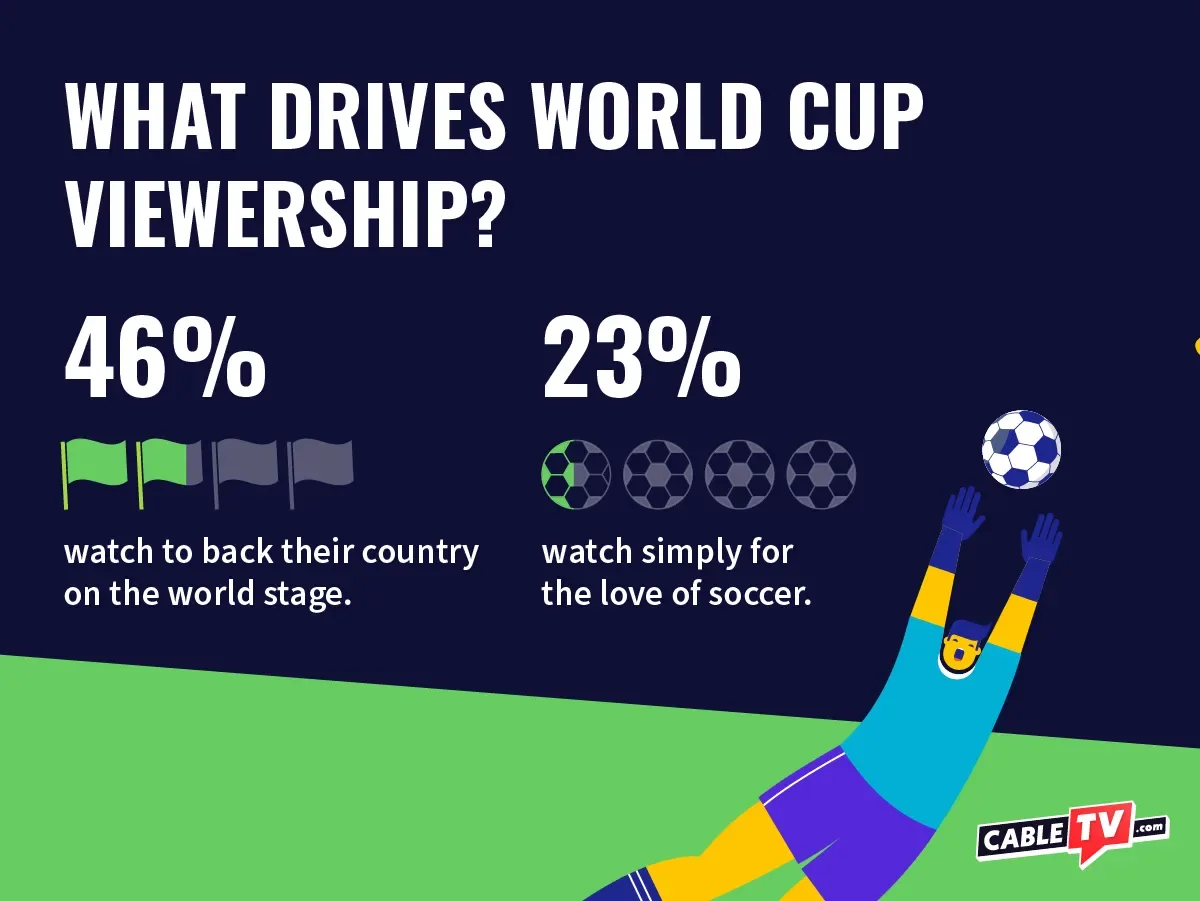
Because the stakes feel so deeply personal, World Cup FOMO is driving millions of cord-cutters to subscribe to new streaming services — fully intending to cancel their plans once the championship trophy is lifted.
How much fans expect to spend on World Cup streaming
When it comes to watching the World Cup on a screen, American viewers’ financial expectations are heavily divided. According to a companion report by Reviews.org, nearly half of all U.S. viewers (44.5%) expect to spend absolutely nothing ($0) on streaming, relying instead on antenna TV, complimentary apps, or their current TV plans.
For the fans who plan to pay, keeping costs under control is the primary goal. The vast majority of paying customers expect to keep their total bill under $50, with 21.1% spending a modest $1 to $20 and 22.5% spending $21 to $50.
Only a small sliver of viewers anticipate a premium price tag for the tournament. Just 9.9% expect to spend between $51 and $100, and a tiny 2.0% plan to drop over $100. All told, the average expected spend among paying fans settles at a reasonable $36.44 — proving that digital access is a flat-out bargain compared to the price of a stadium ticket.
Will fans keep or cancel World Cup streaming subscriptions?
Signing up for a streaming platform just to catch a specific event is a growing trend for cord-cutters, but most World Cup fans actually plan to stay put after the tournament wraps up. Interestingly, that same Reviews.org report highlights that 58.6% of viewers who subscribe for the footy plan to keep their new streaming service long-term.
For the rest of the viewing field, subscription retention is a much shorter play. Roughly 24.4% of fans plan to hold onto their services for an extra two to three months before canceling, while 17.0% plan to pull the plug immediately after the championship match. For these viewers, the streaming bump is purely temporary — a short-term rental to witness soccer history before returning to their regular billing baseline.
How much does it cost to attend a World Cup match?
Face-value tickets vs. fan budgets
With the tournament happening right here in North America, the hype to experience matches in person is at an all-time high. But even before factoring in travel, simply getting through the gates requires a serious monetary commitment. While face-value tickets technically start at $60 for select fans, FIFA’s new dynamic pricing model has pushed official front-row seats for the final to more than $30,000.
That financial reality is keeping a huge chunk of the fanbase at home. Currently, only a small fraction of the World Cup audience is locked in: just 5.1% have secured seats, while another 16.0% are actively hunting for them. For most people, the stadium experience simply isn’t in the cards. A significant 47.1% of fans have zero interest in attending, and another 27.0% desperately want to go but feel completely priced out.
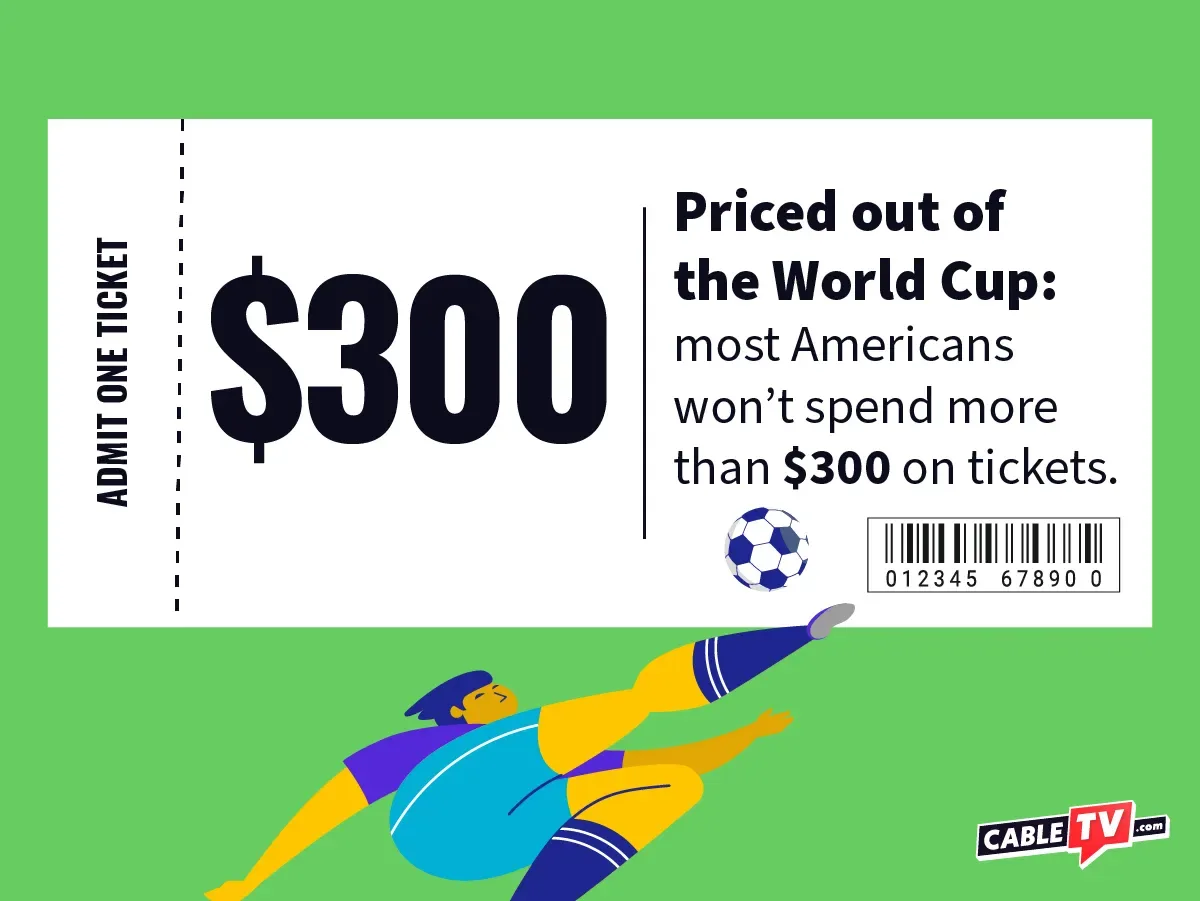
For those still holding out hope of attending, even a generous summer budget leaves little wiggle room for World Cup prices. The absolute maximum amount the average fan is willing to pay for a single upper-deck ticket is just $302.53. Yet, that ceiling has a bit of give when star power is involved, as attendees are willing to shell out an extra $108.08 on average if they know for a fact that their favorite player is in the starting lineup.
The overlooked costs of traveling to host cities
Of course, admission is only the beginning. For anyone leaving their home city, the logistical costs of flights, hotels, and stadium food pile up fast. Complicating matters is the tournament’s sprawling geographical footprint. The 16 North American host cities are arranged in regional clusters to ease travel for the teams, but this setup leaves giant location gaps that alienate domestic fans.
For instance, a major regional hub city like Chicago is completely missing from the map — largely because it opted out due to FIFA’s financial demands and taxpayer risks. With omissions like these, fans in the Midwest will likely find themselves road-tripping to Toronto or Kansas City as their closest options. Forced to cover these massive distances, fans packing their bags expect to drop a hefty average of $2,277.33 on their total World Cup getaway.
How fans plan to pay for World Cup tickets and travel
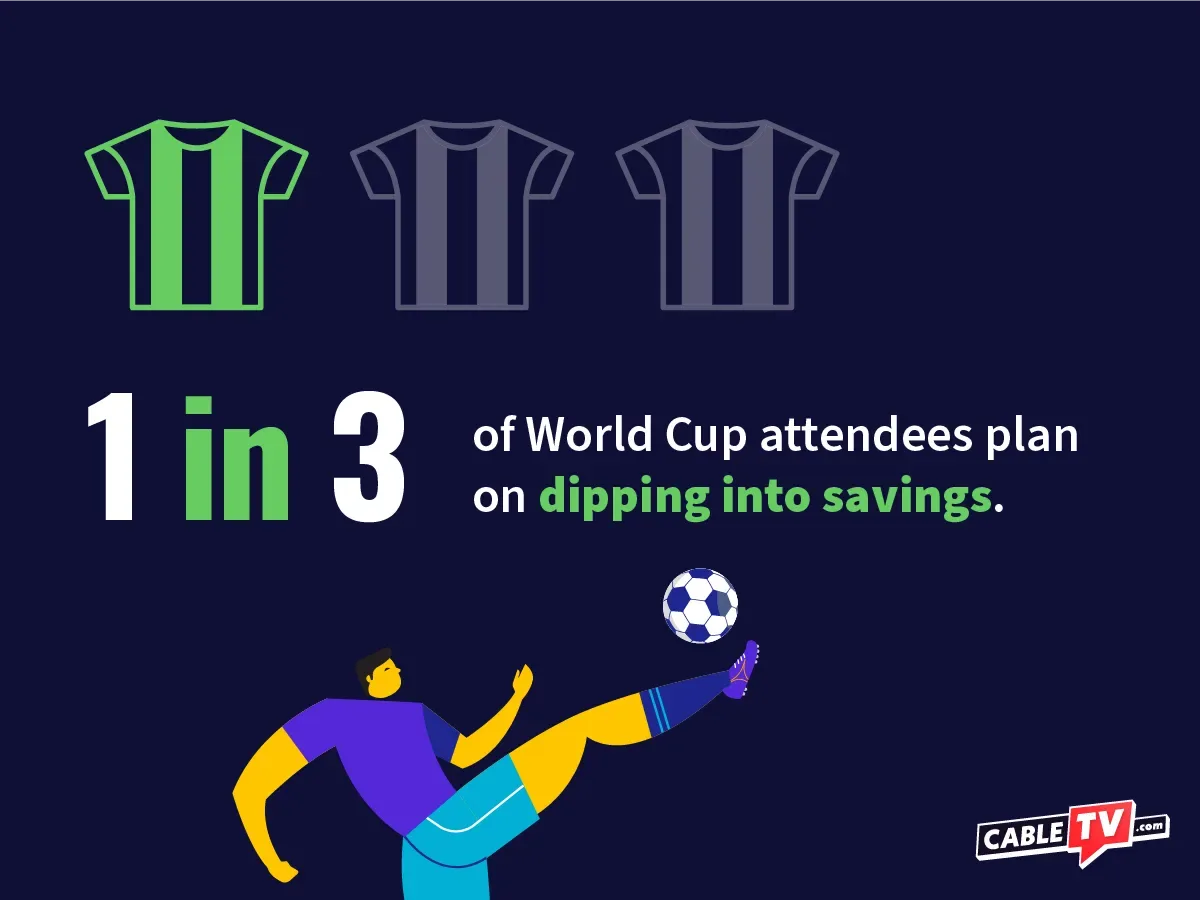
Dropping thousands of dollars on a live sports vacation requires some creative financial footwork. When it comes to funding their World Cup dreams, most travelers are relying on the money they’ve already tucked away. Our survey found that 36.4% of attendees plan to use their personal savings to pay for tickets and travel, while 24.3% plan to slide a standard credit card through the reader and pay off the balance by the end of the month.
For those without an active nest egg, the tournament means taking on a budgetary hangover. About 11.3% of fans expect to shoulder lingering credit card bills, and 6.9% plan to turn to Buy Now, Pay Later (BNPL) services like Affirm or Klarna to split up the sticker shock. On average, fans who expect to take on debt for the World Cup anticipate carrying a balance of $840.84 for more than three months — a notable post-tournament financial burden for those attending in person.
To keep that debt as low as possible, fans are getting ready to tighten their belts in other areas. Lifestyle upgrades are the first to hit the chopping block. Forty-five percent of respondents who want to attend are willing to cut back on clothing and luxury shopping, while 43.5% plan to slash their budgets for dining out and takeout. Another 31.0% are sacrificing other vacations and travel plans entirely, choosing instead to put all of their seasonal leisure money into a singular, unforgettable soccer experience.
Will Americans watch the World Cup at work?
With most World Cup fixtures taking place during standard North American business hours, the workplace is bound to see some significant disruption. Our survey revealed that watching entertainment on company time is already common, with a full 51.1% of respondents admitting they have streamed live TV, movies, or sports while “on the clock.” Of those at-work streamers, 41.3% say they reserve this sneaky viewing behavior strictly for major cultural events like the World Cup or the Super Bowl.
To catch the World Cup’s biggest moments, employees are perfectly willing to shuffle their professional schedules or simply ignore them entirely. Here’s a breakdown of the lengths fans will go to tune in during work hours.
- Taking it off the books: 33.1% of fans plan to take an official vacation day or use PTO to watch.
- Playing hooky: 10.0% are fully prepared to call in sick or make up an excuse to stay home.
- The multitaskers: 7.3% intend to “fake” working while secretly streaming matches on a second screen or phone.
What devices will fans use to watch the World Cup?
When the tournament kicks off, the vast majority of viewers (68.4%) expect to watch most matches from the comfort of their own homes. Whether they’re tuning into FOX One for standalone English-language coverage or firing up Peacock Premium for its affordable Spanish-language simulcasts, fans are relying heavily on their primary living room screens.
While traditional cable boxes are still in the mix, digital streaming devices and mobile tech are dominating the viewing landscape. The table below breaks down the specific hardware fans plan to use for watching the 2026 World Cup.
| Viewing device | Expected viewership |
|---|---|
| Smart TV (built-in apps) | 65.7% |
| Smartphone | 49.0% |
| Streaming media player (Roku, Apple TV, Fire TV Stick, etc.) | 42.0% |
| Laptop or desktop computer | 28.1% |
| Traditional cable/satellite box | 21.5% |
| Tablet | 21.0% |
Because so much of this viewing relies on a reliable internet connection rather than a traditional cable feed, fans are boosting their bandwidth ahead of the opening match. A dedicated 20.2% of viewers say they plan to upgrade their home internet or mobile data plans specifically to ensure a smooth, buffer-free viewing experience.
With nearly half of the World Cup fanbase planning to stream matches on their phones, mobile data reliability is paramount. A seamless connection now plays a major role in the overall cost to watch the World Cup, proving just as essential to the modern fan as securing the right streaming subscriptions.
Methodology
CableTV.com surveyed 1,000 FIFA World Cup fans in the U.S. to analyze their viewing intentions and financial budgets for the 2026 tournament. The study heavily focused on digital habits, tracking expected streaming costs, subscription churn, and potential tech upgrades across various viewing devices. Additionally, the poll explored the broader economic and professional impact of the matches by measuring anticipated ticket and travel expenses, as well as workplace viewing behavior.

